
Summary:
An emerging threat has been identified as the Cloud Atlas spy group, showcasing an advanced cyber espionage campaign targeting specific entities across Russia, Belarus, Azerbaijan, Turkey, and Slovenia. This pro-government Advanced Persistent Threat (APT) group specializes in infiltrating industrial enterprises and state-owned companies, aiming to pilfer confidential information. Recent attacks have been observed through targeted email campaigns using sophisticated tactics, employing addresses from popular email services and military registrations. These attacks, while seemingly innocuous on the surface, carry malicious attachments that exploit vulnerabilities within systems.[/subscribe_to_unlock_form]
Summary:
An emerging threat has been identified as the Cloud Atlas spy group, showcasing an advanced cyber espionage campaign targeting specific entities across Russia, Belarus, Azerbaijan, Turkey, and Slovenia. This pro-government Advanced Persistent Threat (APT) group specializes in infiltrating industrial enterprises and state-owned companies, aiming to pilfer confidential information. Recent attacks have been observed through targeted email campaigns using sophisticated tactics, employing addresses from popular email services and military registrations. These attacks, while seemingly innocuous on the surface, carry malicious attachments that exploit vulnerabilities within systems.[emaillocker id="1283"]
This campaign adopted sophisticated strategies utilizing targeted emails carrying malicious attachments. These emails, posing as reputable organizations like the "Moscow City Organization of the All-Russian Trade Union of State Institution Workers" and the "Association of Training Centers," exploited pertinent topics such as support for SVO participants and changes in legislation regarding military registration.
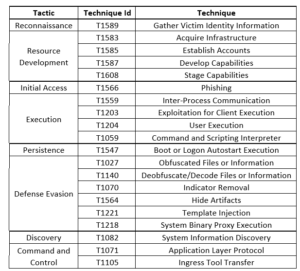
The attack chain involved intricate steps. Upon opening an email attachment, a remote template link hidden within the document's stream triggered the download process. The attackers exploited the CVE-2017-11882 vulnerability, leveraging shellcode embedded within an RTF file to download and execute an obfuscated HTA file. This file, upon execution, initiated a series of actions, creating files, adding scripts to system startup, and facilitating network interactions aimed at retrieving subsequent malicious payloads. The HTA file, along with VBS scripts concealed in alternative data streams, demonstrated a multi-layered obfuscation technique. Upon decryption, these scripts enabled the download and execution of successive stages from the attacker's server, showcasing adaptability to evade conventional security measures.
The attack's complexity underscores the evolving sophistication of Cloud Atlas' strategies, posing significant threats to organizations, particularly in sectors like industrial enterprises and state-owned companies. The utilization of multiple stages, obfuscation techniques, and dynamic payload retrieval highlights the need for robust and adaptive cybersecurity measures.
Threat Profile:
References:
The following reports contain further technical details:
https://thehackernews.com/2023/12/cloud-atlas-spear-phishing-attacks.html
[/emaillocker]