
Summary:
A concerning development has emerged in the realm of cybersecurity, as reports have surfaced about a series of targeted attacks on state organizations in Ukraine. These attacks involve the utilization of an open-source post-exploitation and command-and-control framework known as 'Merlin.' This framework, coded in Go and available on GitHub, has garnered attention due to its versatile capabilities that allow for unauthorized access and control of compromised networks.[/subscribe_to_unlock_form]
Summary:
A concerning development has emerged in the realm of cybersecurity, as reports have surfaced about a series of targeted attacks on state organizations in Ukraine. These attacks involve the utilization of an open-source post-exploitation and command-and-control framework known as 'Merlin.' This framework, coded in Go and available on GitHub, has garnered attention due to its versatile capabilities that allow for unauthorized access and control of compromised networks.[emaillocker id="1283"]
Merlin's functionalities are extensive, making it a powerful tool for red team exercises in the hands of security professionals. However, its open-source nature has unfortunately led to misuse by malicious actors seeking to compromise systems and navigate through compromised networks. These attacks have been observed in instances where the initial point of infiltration is a phishing email, seemingly sent from trusted sources like security agencies.
The phishing emails carry attachments in CHM file format. Upon opening these attachments, a sequence of events is triggered. Specifically, JavaScript code is executed, followed by a PowerShell script that fetches, decrypts, and decompresses a GZIP archive. Within this archive lies an executable file called "ctlhost.exe." Running this executable inadvertently results in the infection of the victim's computer with the malware termed 'MerlinAgent.' Once established, this malware provides the attackers with unwarranted access to the compromised system, the data contained within, and the ability to move laterally within the network. One notable aspect of these attacks is the use of open-source tools like Merlin to perpetrate them. This tactic contributes to a heightened level of difficulty in attributing the attacks to specific threat actors. By leveraging openly available resources, the attackers create a situation where their actions leave fewer distinct traces, making it challenging to link their activities to any particular entity.
The significance of these developments cannot be overstated. As state organizations and critical infrastructure are targeted, the implications extend beyond the immediate compromise of data and systems. It underscores the pressing need for robust cybersecurity measures, stringent email security protocols, and continual vigilance against evolving attack vectors. Collaborative efforts among security professionals and organizations are essential to effectively counteract the potential ramifications of such attacks and to safeguard sensitive information and vital systems.
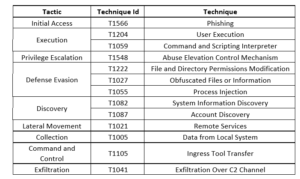
Threat Profile:
References:
The following reports contain further technical details:
[/emaillocker]